Experiments
Real runs of the Binary Unified Theory simulation engine - each one a short clip of what actually happened, the parameters it ran with, and a link to the full data and analysis behind it. See also Observations for findings grouped by what was learned rather than by run.
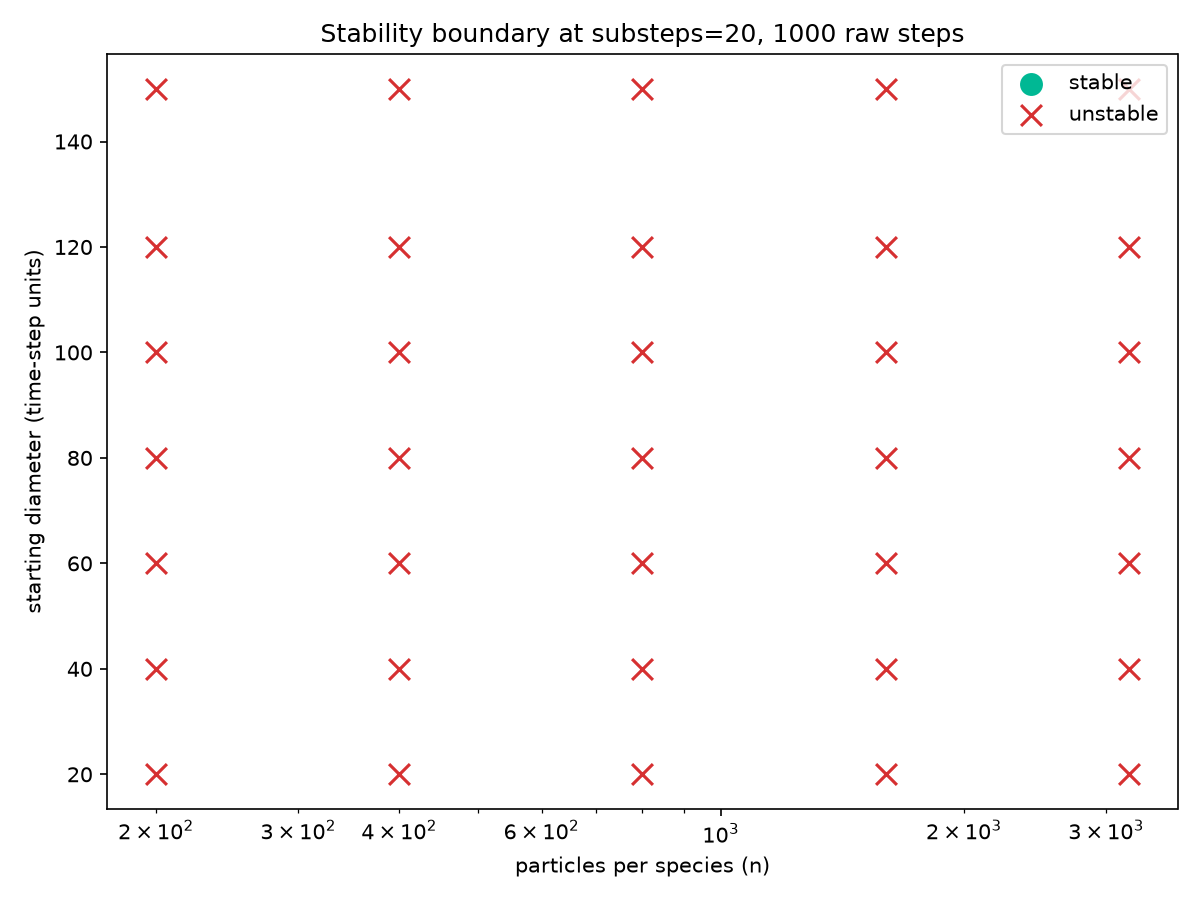
Stability vs. Particle Count and Starting Diameter
A 35-trial sweep across n=200-3,200 and starting diameter=20-150 found zero stable configurations - confirmed by a resolution convergence check, not a single pass.
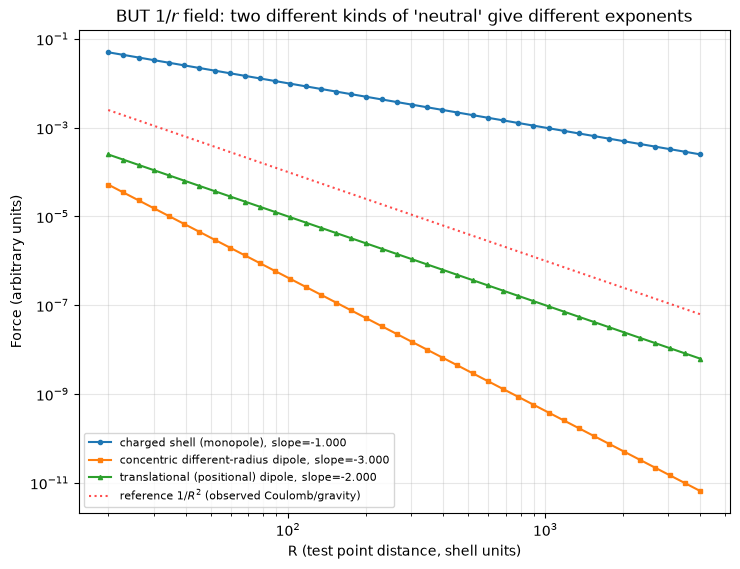
A Neutral Configuration That Recovers 1/R² Exactly
A positionally-displaced dipole fits an exponent of exactly -2.00, matching observed Coulomb and gravity - robust across displacement scale, cross-validated independently.
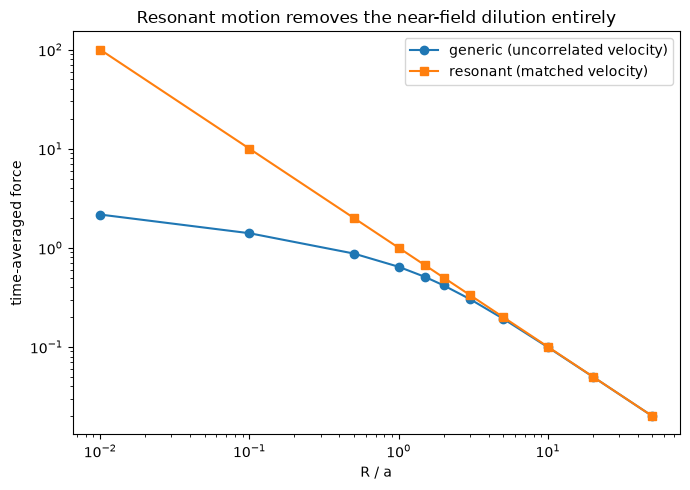
Velocity-Matched Pairs Reach 46x the Coupling
Particles whose velocities are matched to 1 part in 10,000 experience up to 46x the time-averaged force of generic, uncorrelated pairs - a sharp resonance.
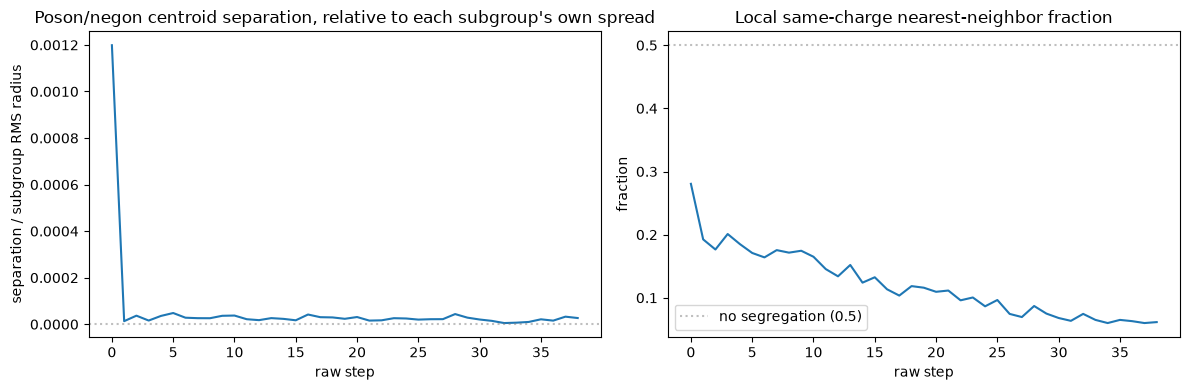
Over 93% of Nearest-Neighbor Pairs End Up Opposite-Charge
A 200,000-particle false-positive audit found the engine's stability signals were unreliable - but a real local charge-pairing signal alongside them.

A Percolating Cluster Network at n=100,000 (Rapidity)
24,521 particles - 24.5% of the swarm - connected in one structure spanning the entire expanded volume as a shell, still growing when the run ended.
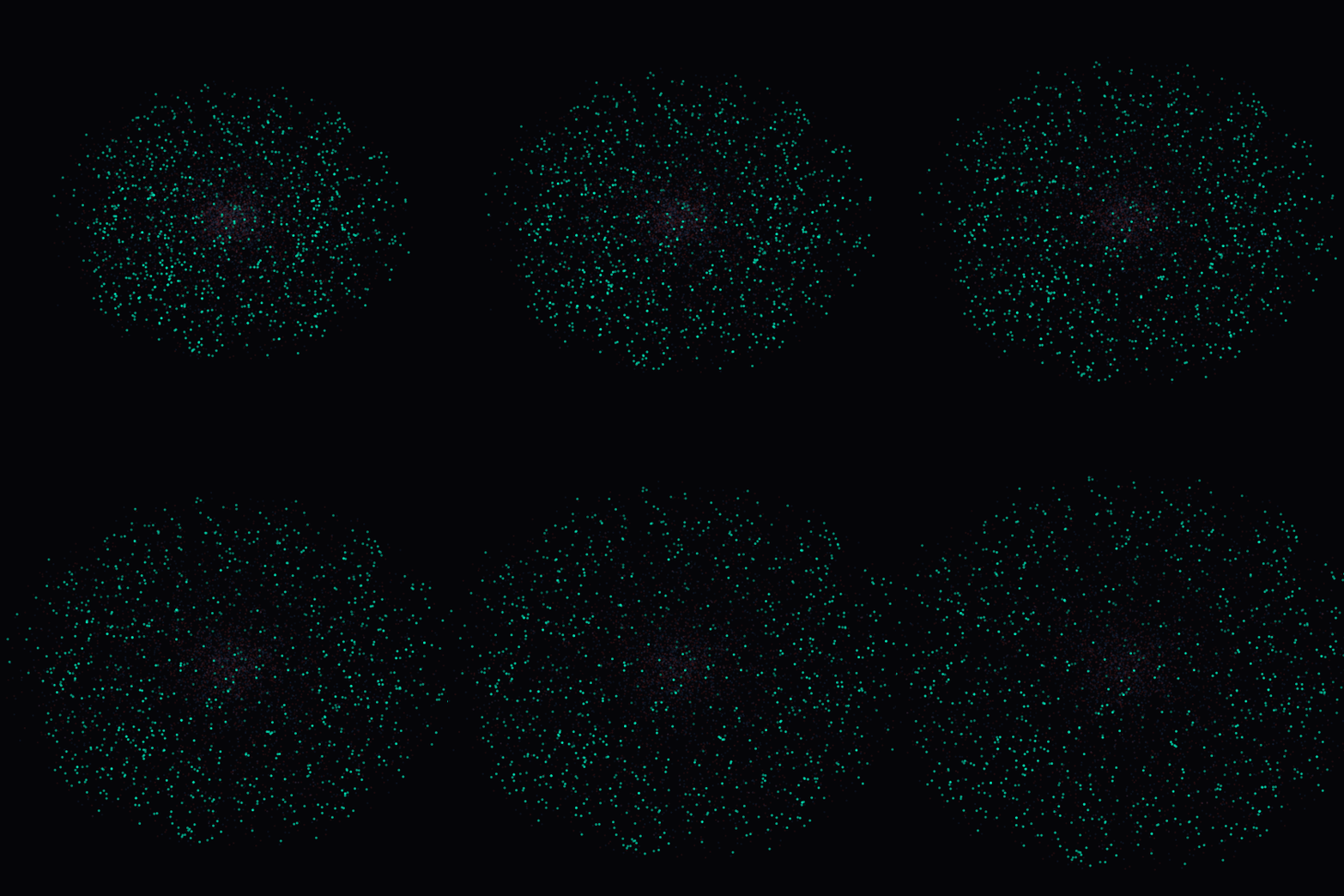
Large-Scale Cluster Formation at n=100,000
A single bound structure of 14,385 particles - over 14% of the whole swarm - tracked with exact particle IDs from start to finish.

Large-Scale Cluster Formation at n=250,000
A single bound structure of 12,472 particles - about 5% of the whole swarm - emerged mid-run.
More experiments are added as runs complete - check back, or follow the development log for updates.